ALVAR AALTO – DESIGN AND ARCHITECTURE
Alvar Aalto’s signature interiors, design and architecture are legendary and now on view in a stunning show at Vitra Design Museum. Finnish architect and designer Alvar Aalto (1898-1976) was one of the most important proponents of organic design in the twentieth century. His architecture continues to captivate with its natural materials and sculptural, curved forms. For the Paimio Sanatorium, Aalto designed the first wooden cantilevered chair in 1932 while his Savoy Vase (1936) remains a quintessential symbol of Finnish design.
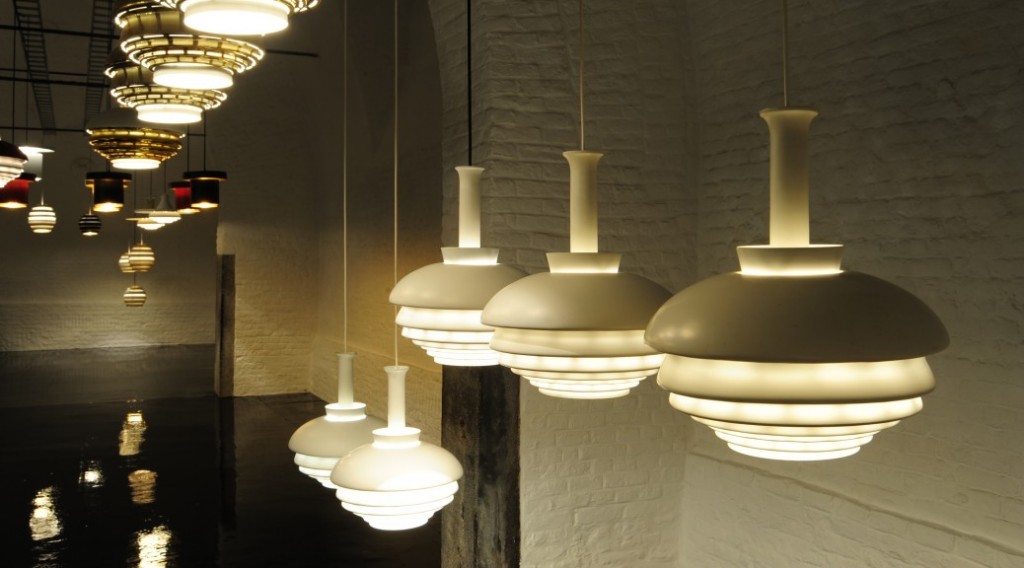
An exhibition at Vitra Design Museum honoring Aalto’s oeuvre provides comprehensive insights into his works, his way of seeing and thinking. “Second Nature” presents Aalto’s most significant buildings, furniture and lighting designs and explores the inspirations that shaped his work. Key themes are Aalto’s dialogue with important artists such as Hans Arp, Alexander Calder and Laszlo Moholy-Nagy, his extensive international collaborations and activities, his investigations of rational architecture as well as his constant concern for the human factor in design.
INFORMATION Alvar Aalto “Second Nature” at the Vitra Design Museum Through 01 March 2015, www.design-museum.de
Aalto is a truly exceptional figure in architecture and design. It is rare to see such a rich and varied carreer both at home in Finland and abroad.After qualifying as an architect from Helsinki Institute of Technology in 1921, Aalto set up his first architectural practice in Jyväskylä. His early works followed the tenets of Nordic Classicism, the predominant style at that time. In the late 1920s and early 1930s, he made a number of journeys to Europe on which he became familiar with the latest trends in Modernism, the International Style.
The pure Functionalist phase in Aalto’s work lasted for several years. It enabled him to make an international breakthrough, largely because of Paimio Sanatorium (1929-1933), an important Functionalist milestone. From the late 1930s onwards, the architectural expression of Aalto’s buildings became enriched by the use of organic forms, natural materials and increasing freedom in the handling of space. It was characteristic of Aalto to treat each building as a complete work of art – right down to the furniture and light fittings. In 1935, Artek was formed to promote the growing production and sales of Aalto furniture.
[frontpage_news widget=”1648″ name=”MORE FROM ART & PHOTOGRAPHY”]
READ MORE FROM ART & PHOTOGRAPHY

“THE SWIRL” – PAINTINGS & DRAWINGS OF MANI NEJAD
Berlin and London based artist Mani Nejad has been developing his Brain Blitz series over a period of several years. It’s a comprehensive suite of delicate works weaving together various media …

“DARKNESS VISIBLE” – A PHOTOGRAPHIC STUDY BY MANI NEJAD
Darkness Visible is a visual journey through urban landscapes portraying their structural and formal qualities. Conceived as a black and white study it presents a narrative of fictional minimalism that is drawn from real places in present time…

SEBASTIAO SALGADO – EPIC MOMENTS
In an aesthetically impressive, large format series photographer Sebastiao Salgado shows us the overwhelming result of an exraordinary expedition: “Amazonia”. Raising awareness of the last untouched corners of the earth…