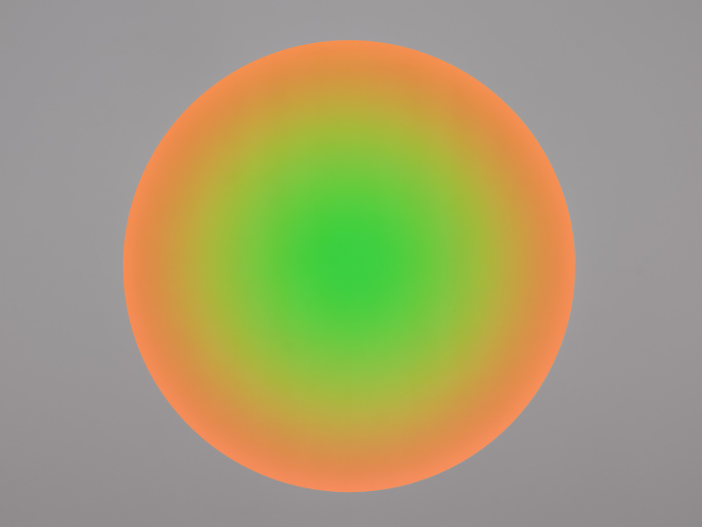
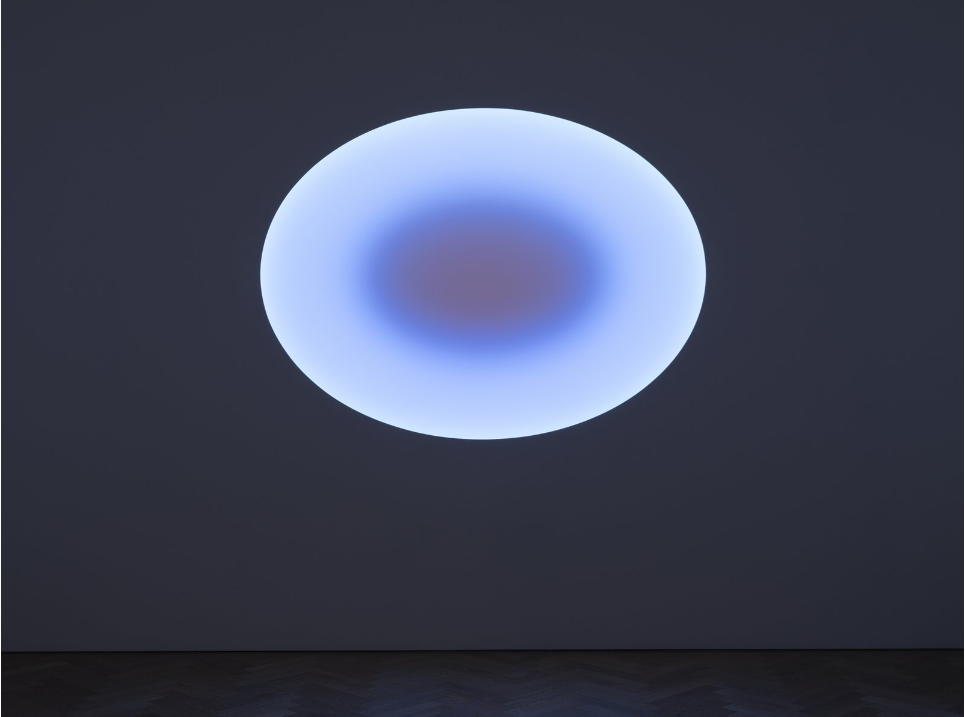
Enjoy Light of the Presence, at Gagosian Gallery Athens, a pairing of two works from GlassSeries (2001–) by James Turrell, Knowing Light (2007) and Rounded Up (2024). A poetic and inspiring ode to nature and its elements.
Since the 1960s, Turrell has been exploring perceptual phenomena ranging from sensory deprivation to optical effects. In 1966, he began working with light in his studio in Ocean Park, California, and early works such as Afrum-Proto (1966), which employ planes of light in relation to architectural structures, became the basis for an ongoing manipulation of built and natural environments. Turrell continues to use light as his primary subject and material in formally simple projects that apply new technology to examine the limits of seeing and induce meditative states
We weren’t made for the midday sun, we were made for twilight. When light is reduced the pupil opens and we can really feel it. —James Turrell
Influenced by the notion of pure feeling in pictorial art, Turrell’s earliest work focused on the dialectic between constructing light and painting with light, building on the sensorial experience of space, color, and perception.
These interactions became the foundation for Turrell’s oeuvre. Since his earliest Projection Pieces (1966–69), his exploration has expanded through various series, including Skyspaces (1974–), Ganzfelds (1976–), and perhaps most notably, his Roden Crater Project (1977–) near Flagstaff, Arizona.
Applying through an advertisement in the back of Artforum Turrell entered graduate school in the fall of 1965 at the newly established University of California at Irvine, where he studied under artists Tony DeLap, John McCracken, and David Gray as well as with art historians John Coplans and Walter Hopps.
During this time, Turrell produced some of his first light sculptures, using gases to create flat flames that burned in even colors. These early works proved challenging to control, halting further experimentation in the medium.
In 1966 Turrell rented a studio space in the former Mendota Hotel in Ocean Park, California, where he began to work with high-intensity projectors as a light source, producing the first of his Projection Pieces, Afrum-Proto, in the spring of 1966. Shortly thereafter, Turrell decided to focus exclusively on his practice and abandoned his graduate studies. From the end of 1968 to 1969 he participated in the Art and Technology program at the Los Angeles County Museum of Art, which brought contemporary artists together with engineers.
Alongside fellow artist Robert Irwin and psychologist Dr. Edward Wortz, Turrell studied the optical phenomenon known as the Ganzfeld effect—the loss of perceptive fields through sensory deprivation. These studies of perceptual anomalies further ignited his interest in the celestial realm, and he began to incorporate aviation into his practice by creating sky drawings with the artist Sam Francis.
GAGOSIAN GALLERY JAMES TURRELL Through May 25, 2004 ATHENS https://gagosian.com
.
READ MORE FROM ART & PHOTOGRAPHY
“DARKNESS VISIBLE” – A PHOTOGRAPHIC STUDY BY MANI NEJAD Darkness Visible is a visual journey through urban landscapes portraying their structural and formal qualities. Conceived as a black and white study it presents a narrative of fictional minimalism that is drawn from real places in present time…
“THE SWIRL” – PAINTINGS & DRAWINGS OF MANI NEJAD Berlin and London based artist Mani Nejad has been developing his Brain Blitz series over a period of several years. It’s a comprehensive suite of delicate works weaving together various media …
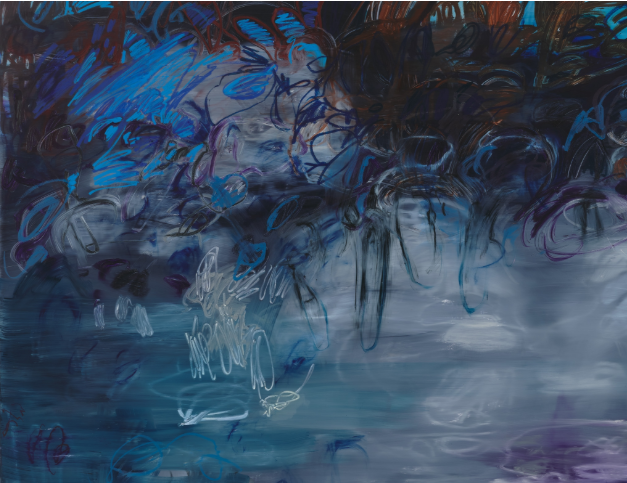
JANAINA TSCHÄPE AT MAX HETZLER GALLERY BERLIN Richly painted using large scale oil sticks in addition to the water-based pigments she previously employed, it marks a fresh direction in Tschäpe’s oeuvre. This material shift allows the artist to “draw” as one would with a pencil or pastel,…