Born in 1914, Lynn Chadwick studied in London and, after living in Paris to learn French, worked as an architectural draftsman and a designer of furniture and textiles before becoming a pilot in the Fleet Air Arm during the Second World War.
He began his artistic career in 1947 with a series of suspended mobiles. An unusual choice at the time, this art form implied physical movement, while depriving sculpture of its traditional mass and support. These works by Chadwick are abstract, but already full of naturalist echoes.
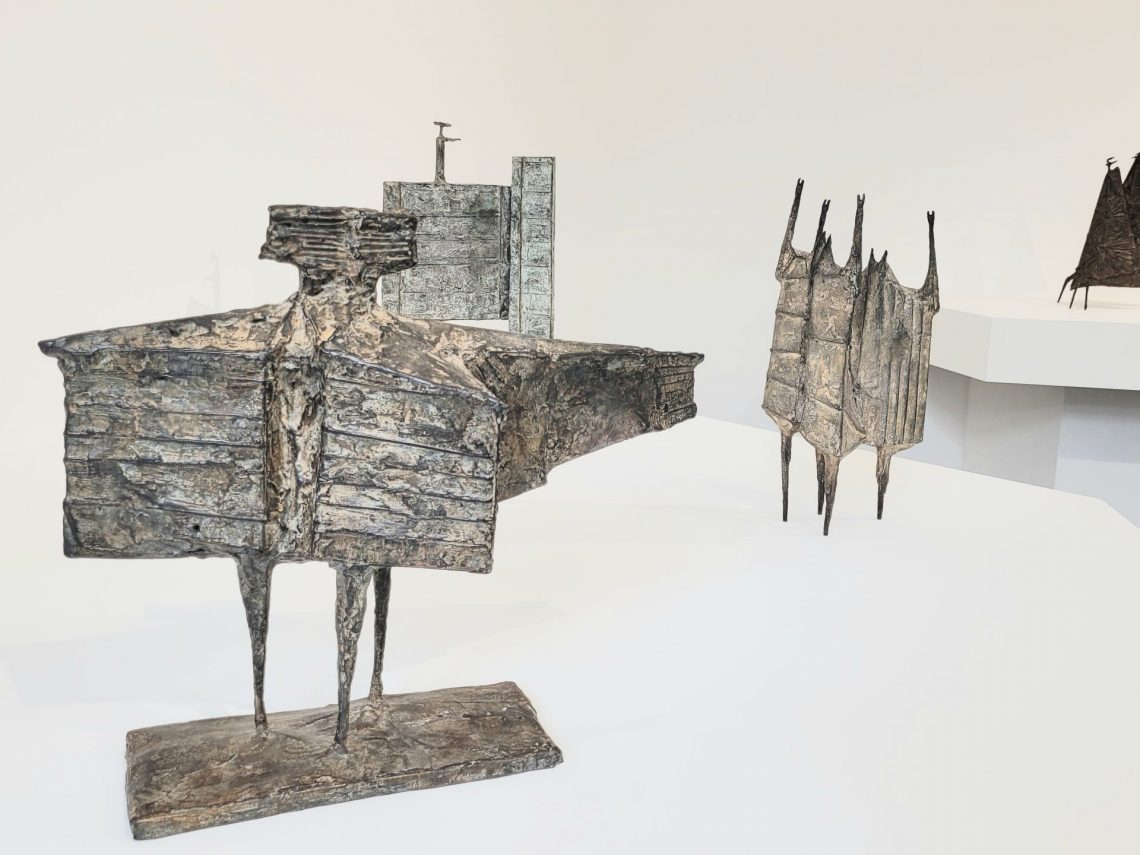
Around 1951–1952, his sculptures left the air and, while still not submitting to gravity, seemed to step (or rather tiptoe) on the ground or on bases. These works sometimes took the form of stabiles that were articulated and flexible, but most often they depicted enigmatic “beasts” and other humanoid, stylised figures with atrophied heads and limbs.
On the international scene, Lynn Chadwick was celebrated as embodying the renewal of postwar British sculpture, and he soon received many awards, such as the International Prize for Sculpture at the Venice Biennale of 1956.
Over a decade, he expressed a unique formal vocabulary based on angular geometry, with large works held up by complex material surfaces and thin supports with a precarious appearance. Critics saw in these works an existentialist gravity that was fitting for a time of reconstruction in England and Europe after the trauma of the Second World War.
With his belief that “art must be the manifestation of some vital force coming from the dark,” Chadwick was connected to the artistic impulses of automatism, Art Informel, and Abstract Expressionism—although, as a sculptor, he was always on the margins of such movements.
To him, sculpture had to stem from an instinctive, pragmatic approach and organic growth—not on the canvas, but in the space of geometry and three dimensions. Taking a different tack from the supple curves of his predecessor Henry Moore, the young sculptor was looking to the work of the constructivist Naum Gabo, the disturbing creations of Jacob Epstein, and the existentialist sculptures of Alberto Giacometti.
LYNN CHADWICK Un siècle d’échecs Through 28 February 2026 PERROTIN GALLERY Paris https://www.perrotin.com
.
.
READ MORE FROM ART & PHOTOGRAPHY
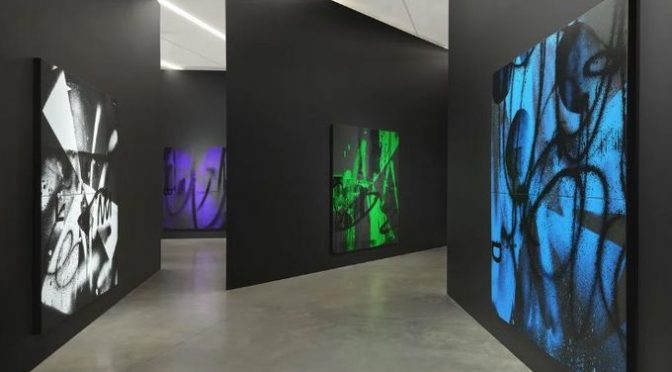
Adam Pendleton – A Microhistory of Marks and Impressions The Langen Foundation in Neuss, Germany, is shortly coming up with “Can I Be?” by Adam Pendleton, a major solo exhibition that explores abstraction, language, and history—examining how these forces converge in unlikely and poetic ways. Pendleton, a central figure in contemporary American…
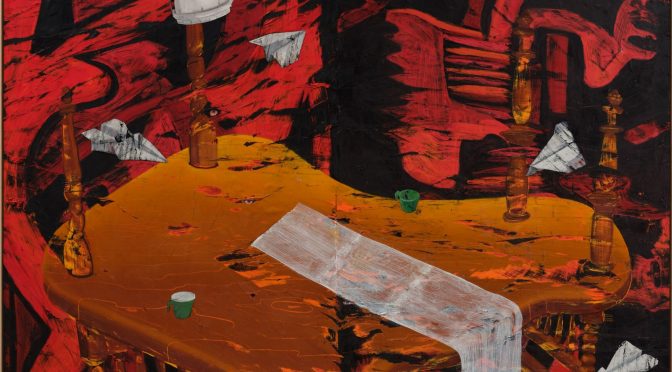
ANGEL OTERO – MAGICAL REALISM AND ABSTRACTION Over the last decade, New York-based artist Angel Otero has experimented with numerous genres and styles, from early still lifes, domestic interiors, and landscapes, to pure abstraction created using his innovative oil paint …
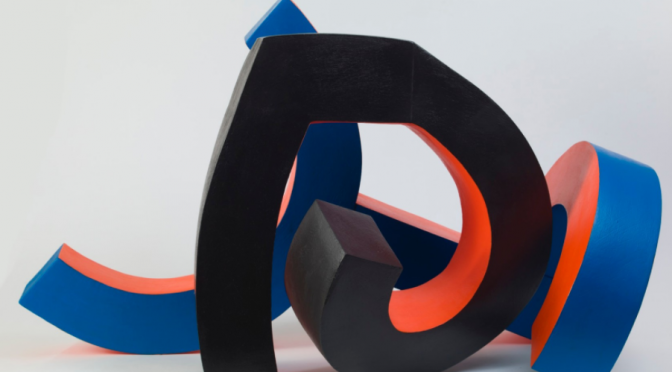
Patricia Volk Pangolin London presents new exciting works by Patricia Volk – an exploration of scale and volume with a new energetic vigour. Pushing the clay and her technique of slab -building to the limit, ‘Construction’ explores this new departure with big, …