DECONSTRUCTING TRUTH: NEW WORK BY THOMAS RUFF
In his considered approach to the means and possibilities of photography, Thomas Ruff explores a breadth of themes that is reflected in the range of techniques he employs: analogue and digital exposures taken by the artist exist in his practice alongside computer generated imagery, photographs from scientific archives, and pictures culled and manipulated from newspapers, magazines, and the Internet.
SHARE THIS ARTICLE “New Works – Press ++”, Thomas Ruff, through 5 January, at David Zwirner Gallery, London davidzwirner.com
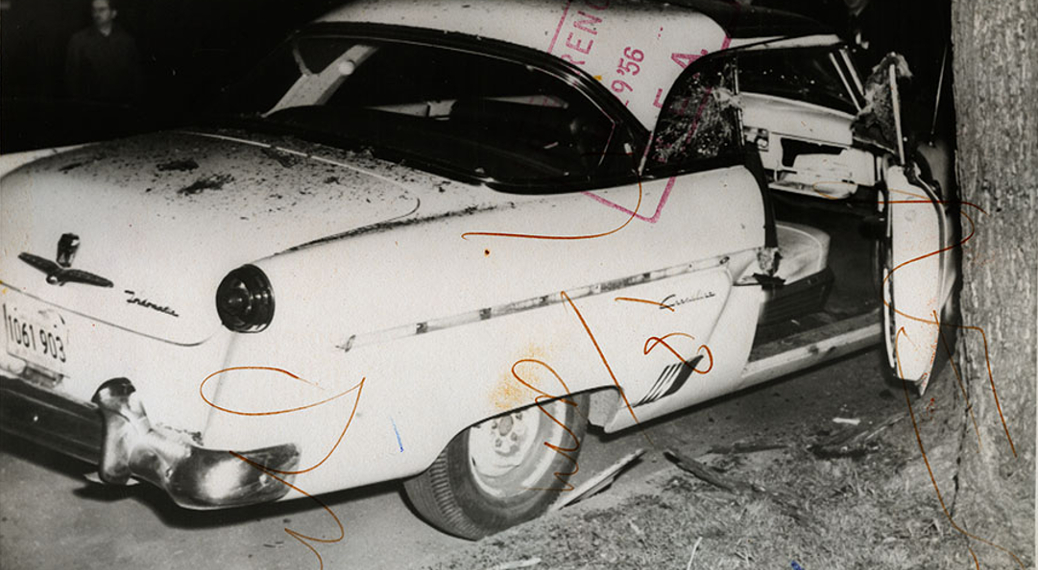
The works in the exhibition present a continuation of the artist’s press++ series, which he debuted at David Zwirner in New York earlier this year. They are photographs of archival media clippings from American newspapers across several decades. While the earlier show focused on space exploration, this selection—which features both large-scale and smaller works—reflects a broader variety of themes, and includes cars, car crashes, and Hollywood stars.
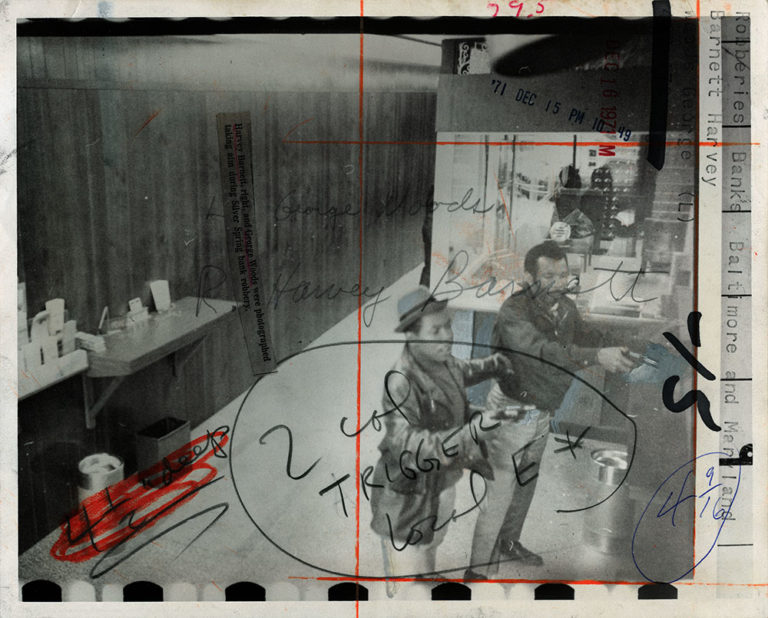
Ruff scanned the front and back of the original documents, which he has been collecting over several years, and combined the two sides. Interested equally in the subject matter (and any touch-ups) on the front of the paper and the words, stamps, signatures, and smudges on the back, he thus created seamless montages of image and text, in the process compromising the integrity of the former as well as adding relevant context.
The overlap causes each side to lose its intended information and merge into a new image altogether. As such, the often disrespectful treatment of press pictures by newspaper editors becomes obvious, as text, cropping, and retouching can all fundamentally change the original document.
press++ continues Ruff’s long-standing interest in the deconstruction of the image and the new structures of photography following digital technology. It relates to earlier series by the artist including Newspaper Photographs (1990-1991), in which images were sourced from analog newspaper prints, and jpegs (2004-2007), where he used digitally disseminated photographs.
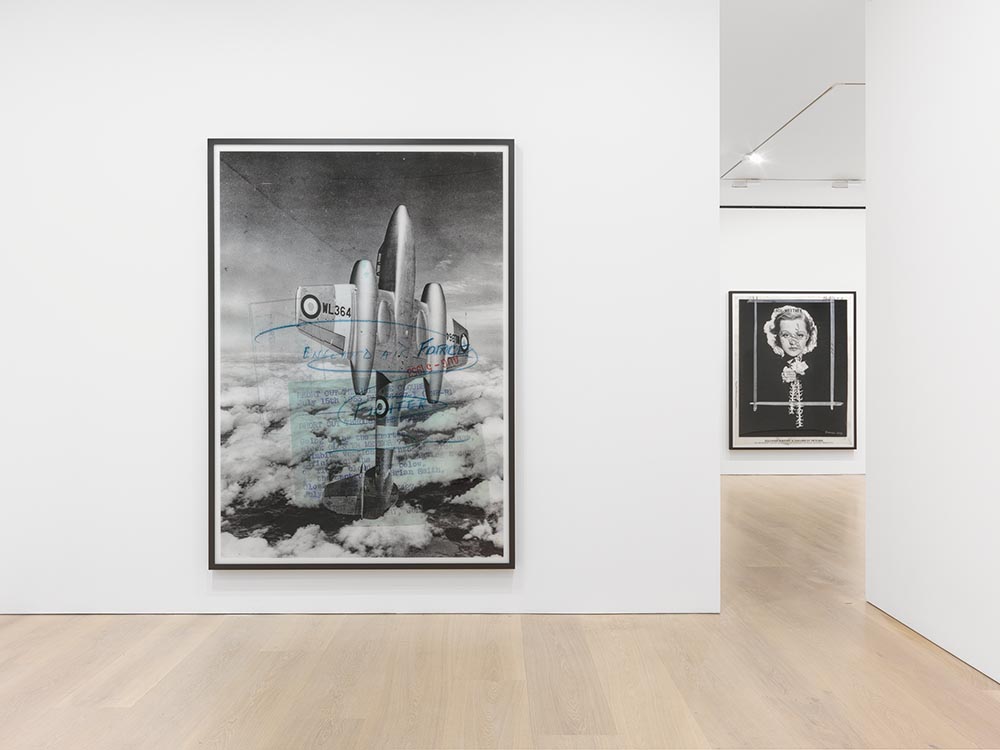
The new works further recall the emergence of photomontage in Germany in the 1920s, where it was employed by Dada artists as a potent and subversive political tool.
Ruff’s digital composites, however, are not concerned with the often fragmented and surrealistic effects produced by these art historical precedents, but with the treatment of the photographic image when it is redistributed and re-archived. As layers of information coexist seamlessly, the idea of a source becomes increasingly obsolescent and the image acquires even greater agency. The information of the press image is lost in favor of an image of its own artistic value.
[frontpage_news widget=”1648″ name=”MORE FROM ART & PHOTOGRAPHY”]
READ MORE FROM ART & PHOTOGRAPHY
“THE SWIRL” – PAINTINGS & DRAWINGS OF MANI NEJAD
Berlin and London based artist Mani Nejad has been developing his Brain Blitz series over a period of several years. It’s a comprehensive suite of delicate works weaving together various media …

“DARKNESS VISIBLE” – A PHOTOGRAPHIC STUDY BY MANI NEJAD
Darkness Visible is a visual journey through urban landscapes portraying their structural and formal qualities. Conceived as a black and white study it presents a narrative of fictional minimalism that is drawn from real places in present time…
JANAINA TSCHÄPE AT MAX HETZLER GALLERY BERLIN
Richly painted using large scale oil sticks in addition to the water-based pigments she previously employed, it marks a fresh direction in Tschäpe’s oeuvre. This material shift allows the artist to “draw” as one would with a pencil or pastel,…