ART BASEL PARIS 2025
This week, Paris will once again remind the art world why it has always been more than just a backdrop. The fourth edition of Art Basel Paris opens at the Grand Palais from 24 to 26 October, bringing together over 200 galleries from nearly 40 countries. What was once seen as Basel’s French offshoot has quickly become one of Europe’s most self-assured fairs — and a reflection of how Paris has repositioned itself at the centre of contemporary art.
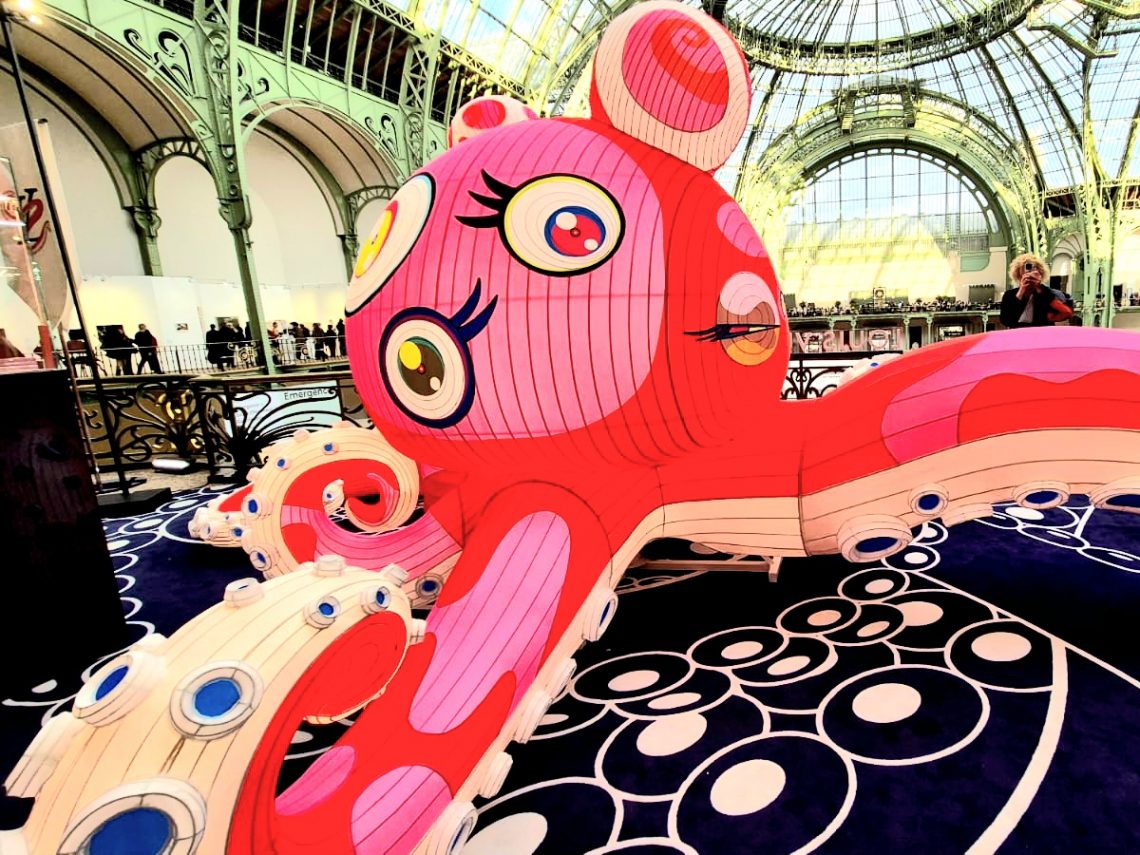
The Grand Palais — freshly restored, luminous, and commanding — gives this edition a sense of permanence. The venue, with its vast iron-and-glass nave, feels like a statement in itself: that Paris deserves a fair of this scale, and that contemporary art belongs as much to its architectural heritage as to its avant-garde pulse. The fair’s atmosphere is less about spectacle and more about substance, as galleries balance blue-chip solidity with new names that suggest where taste and attention are heading next.
This year’s programming reinforces that duality. Alongside established international players, the “Emergence” sector offers a view into the new generation: smaller galleries introducing artists who operate at the edge of form, material, and social narrative. Many of these artists address themes of ecology, migration, and digital identity — issues that feel less like curatorial boxes and more like the air that contemporary art now breathes. It’s a reminder that Art Basel Paris, for all its grandeur, wants to stay attuned to the present tense.
French galleries, meanwhile, are claiming space with a new kind of confidence. With more than sixty domestic participants, the fair feels deeply embedded in the local scene rather than superimposed upon it. Paris’s own network of institutions, project spaces, and independent curators has matured over the past decade, and the fair seems to benefit from that momentum. There’s a sense that Art Basel Paris is not trying to “import” an art world into the city — it’s revealing one that was already there.
Beyond the Grand Palais, the fair extends its reach through installations and public projects scattered across Paris. These interventions feel less like peripheral programming and more like an assertion of what makes the French capital unique: the idea that art and urban life can merge seamlessly. For visitors, it means that the fair doesn’t end at the exit — it continues in the streets, museums, and cafés where conversation spills naturally from booth to boulevard.
Market-wise, Art Basel Paris arrives in a moment of quiet recalibration. After years of exuberant speculation, collectors and galleries alike are embracing a more reflective rhythm. The fair mirrors that shift: its tone is less transactional, more curatorial. It’s a place for testing ideas as much as prices. That may be its real power — to suggest that commerce and culture need not be at odds, but can coexist within a shared ecosystem of curiosity and risk.
There’s also a broader narrative at play. Since its inception, Art Basel Paris has been watched for what it might say about the city’s long-term ambitions. Paris+ — as it was first branded — began as an experiment: could the French capital host an international fair that would rival London, Basel, or Miami without losing its own sensibility?
Four years on, the answer appears to be yes. Not because it imitates, but because it resists imitation. The fair’s identity feels distinctly Parisian — elegant yet restless, cosmopolitan yet self-assured.
As the art world converges on the Grand Palais, that identity will be on full display. Expect less flash and more friction: conversations that stretch from painting to politics, from the poetics of material to the pragmatics of collecting. Art Basel Paris is not merely another stop on the circuit; it’s a fair that reflects a city in renaissance.
Cover photo by Mani Nejad.
ART BASEL PARIS
24 through 26 October 2025
GRAND PALAIS
PARIS, FRANCE
.
.

